Stages
01 Emphatize
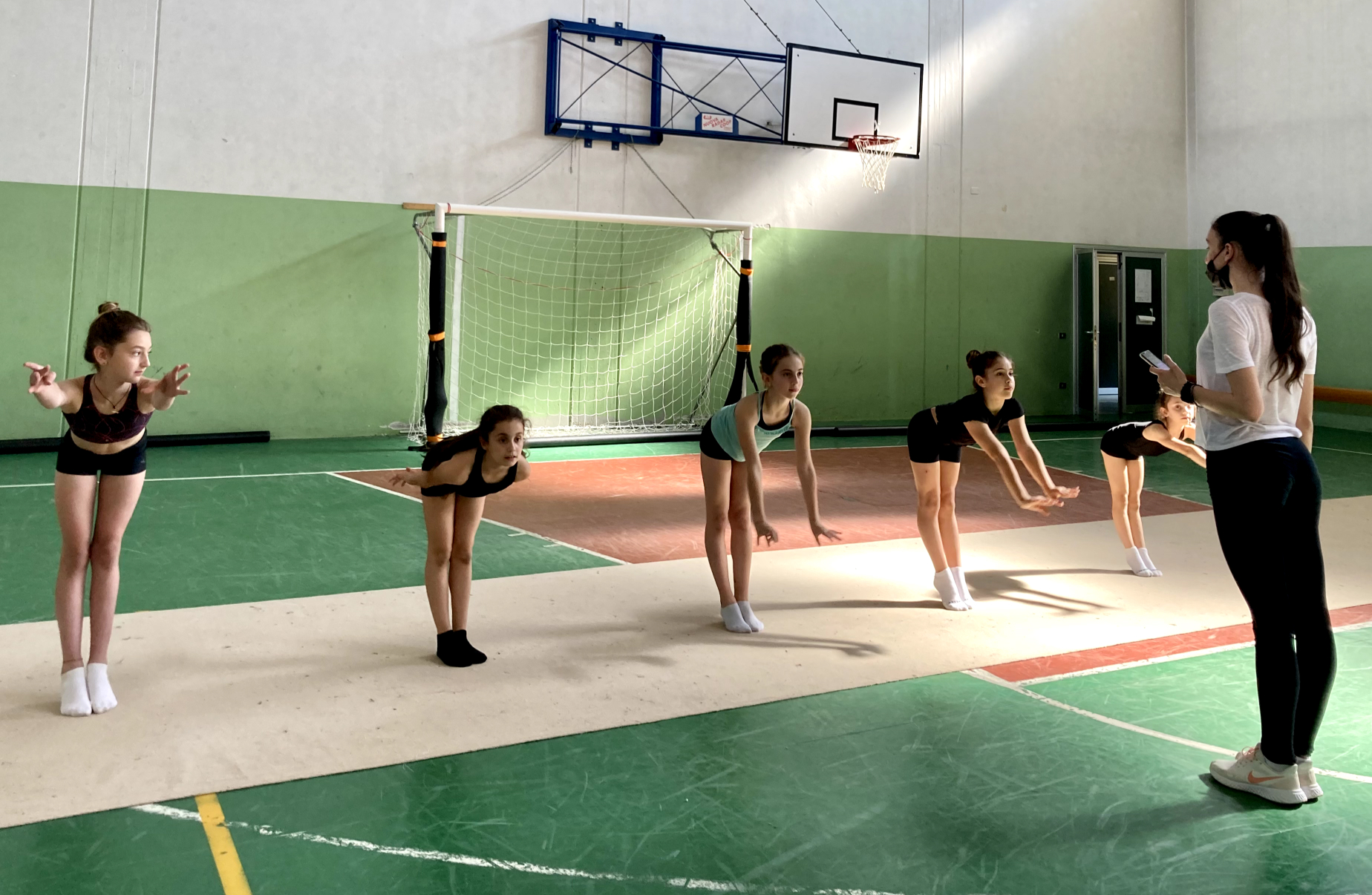
The exploration of the initial context was carried out through field research tools such as semi-structured interviews with rhythmic gymnastics coaches and user observation in the gym, and desk research by analyzing online papers.
02 Define
The problem is that coaches think the official training is lacking in some respects. For example, it is based on a view of learning as knowledge accumulation that sees coaches in a passive role, when they want to be active. Current training is fragmented into several modules, where it could be continuous and field-based.
03 Ideate
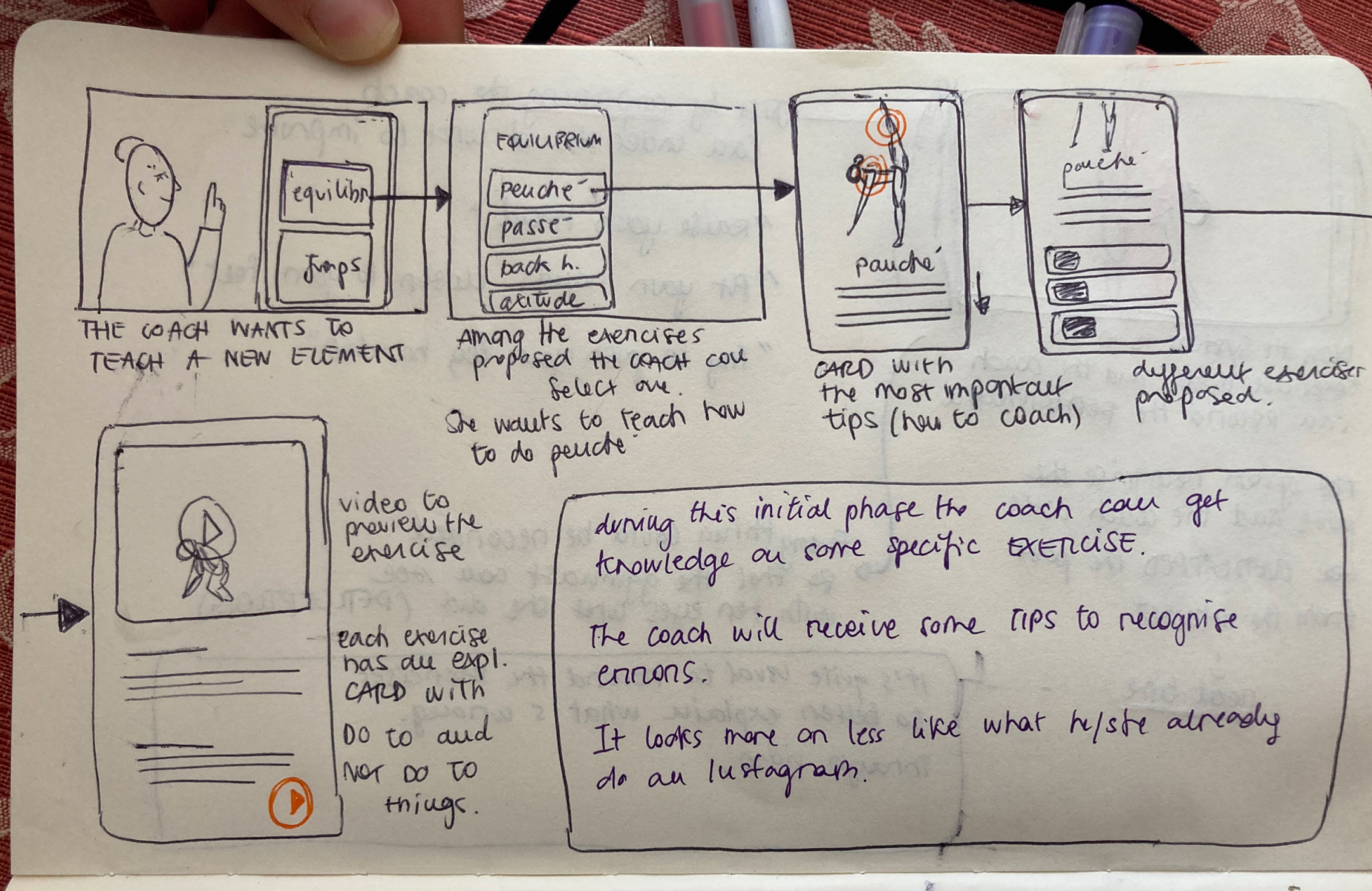
The system then takes the form of a mobile application for smartphones or tablets to be used during training. The user can choose an exercise from a collection, and receive all the necessary information before starting, with a focus on anatomical knowledge. Then, using the device's camera, the coach frames the athlete performing the exercise and receives visual feedback on the correctness of the pose, being able to give verbal cues to the athlete. In the end, the coach and athletes can review the performance together and receive notes on the execution.
They will also have to take a theory quiz. The system uses a gamification approach to try to be more engaging for the athletes as well.
They will also have to take a theory quiz. The system uses a gamification approach to try to be more engaging for the athletes as well.
04 Prototype
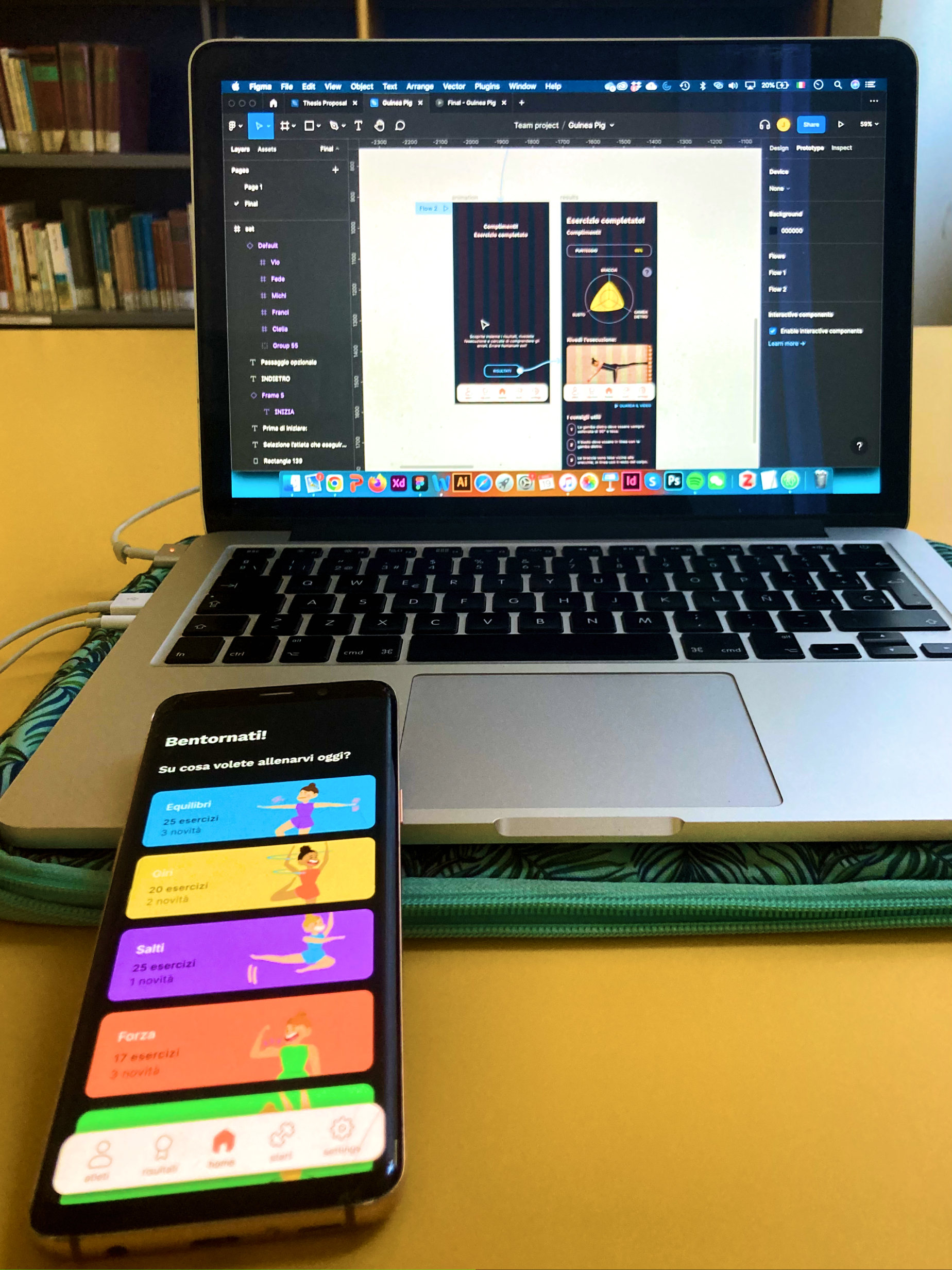
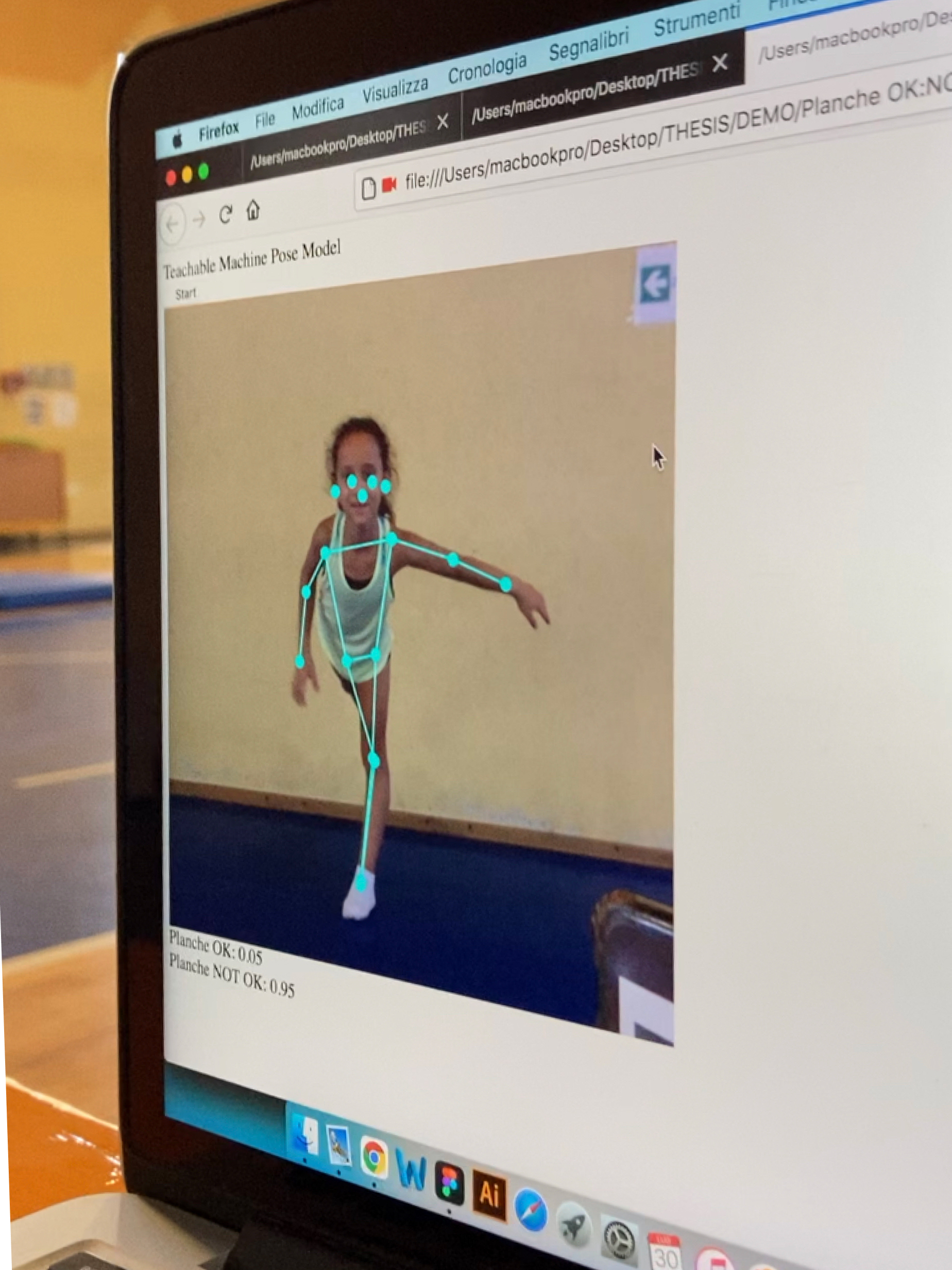
The UI part of the prototype was realized through Figma. The interfaces are intended to be playful and fun.On the other hand, the more technical part required training the algorithm from Google Teachable Machine, an online platform. I trained the algorithm on one exercise for which I selected three poses. Each pose had two classes: one correct and one incorrect. The code then was exported and reworked in situ for the skeleton to change color depending on the class (whether correct or incorrect) and for it to take on the size of a web page.
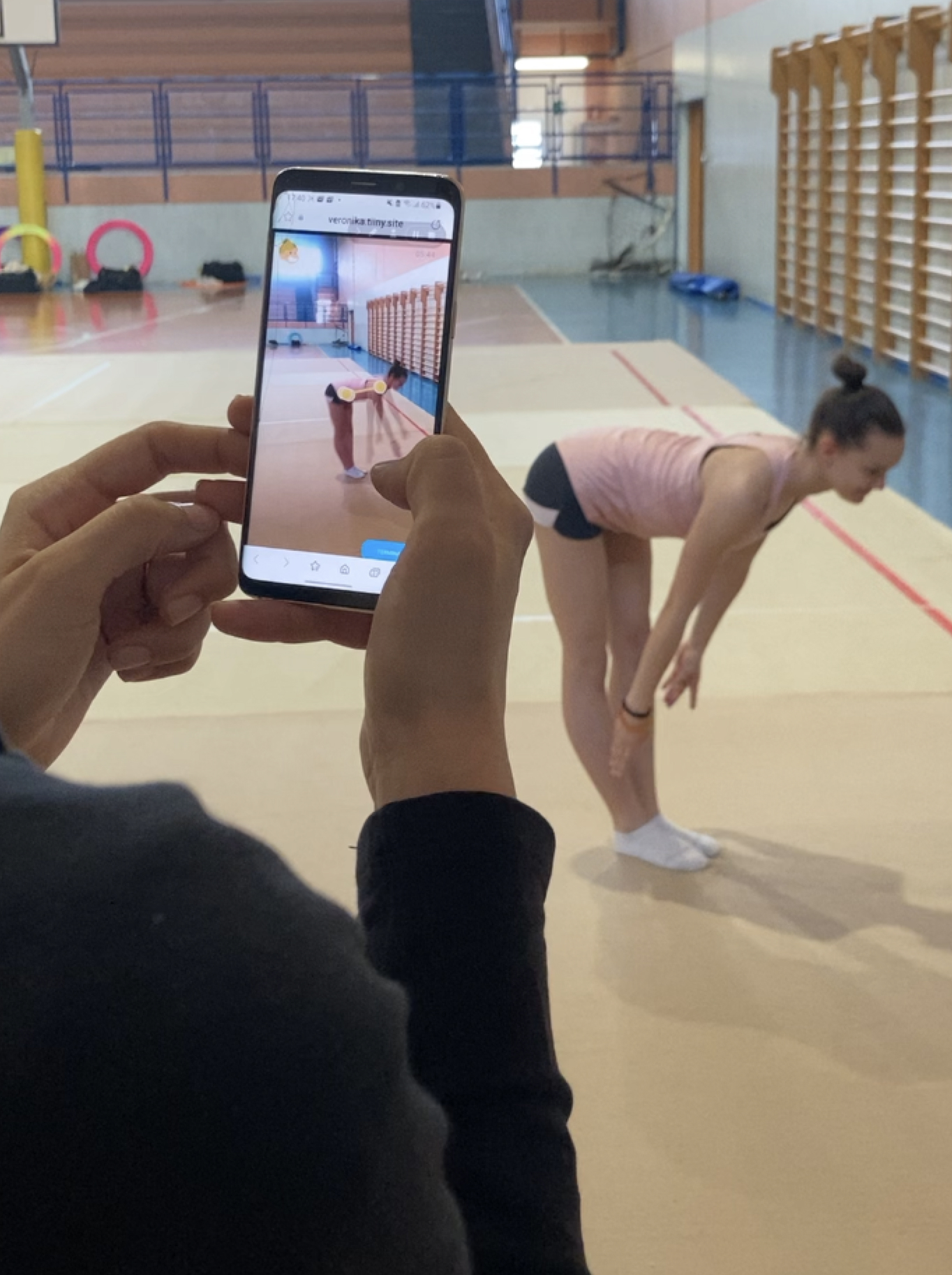
06 Test
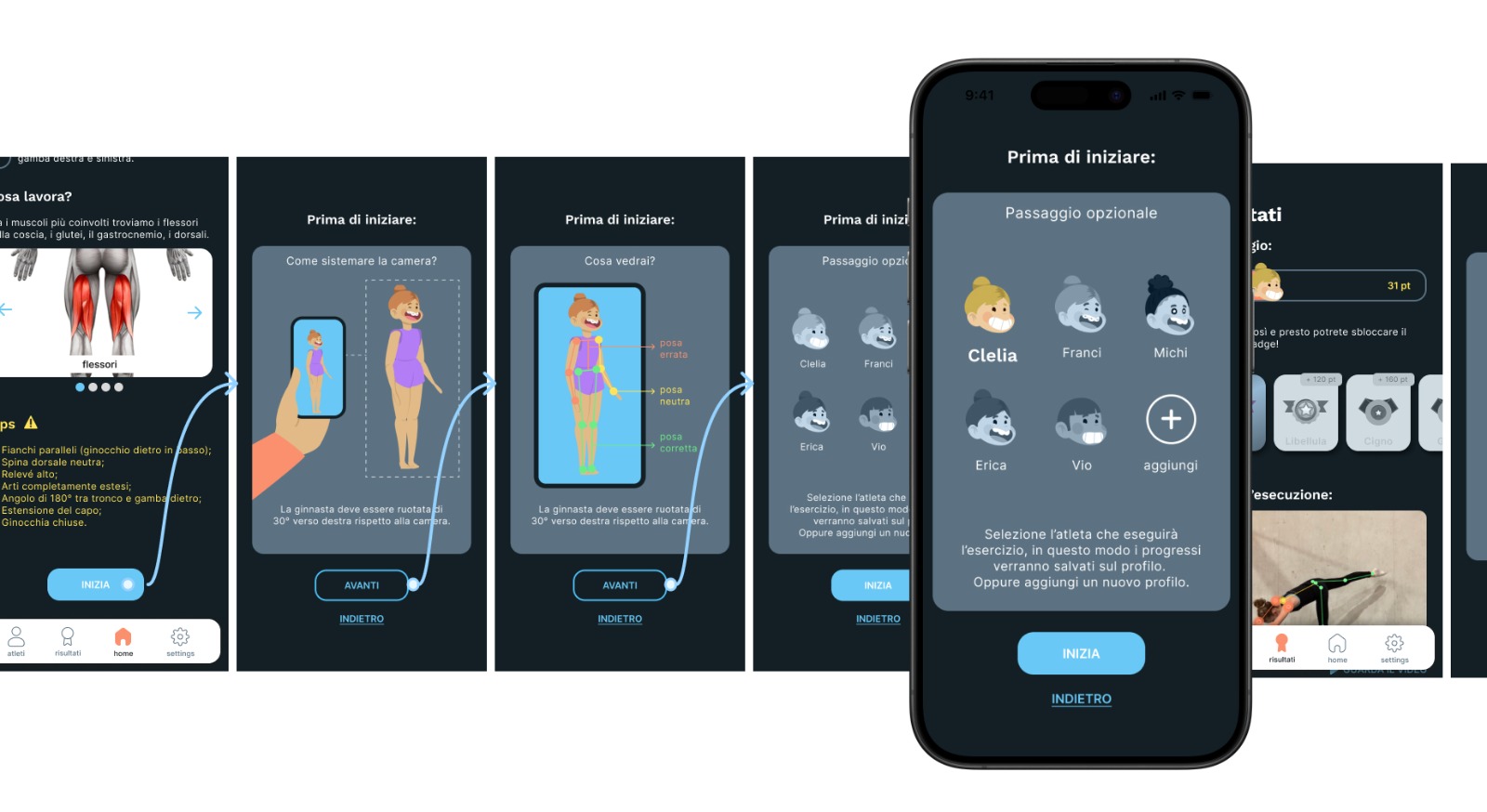
The proposed new design seeks to be fresher and more youthful. The organization of the content wants to be clearer and more immediate than before and the navigation more guided while always trying to give feedback on the status of the system.
UI Design
Since the application is designed for both coaches and athletes, and leverages gamification, the UI design is intended to provide users with a unique visual and interactive experience inspired by cartoon aesthetics. The design combines illustrative elements with an intuitive user interface, creating a fun and playful environment